
Free Shipping on Orders Over $800 | Become a customer!

Apply Now

Search

This section doesn’t currently include any content. Add content to this section using the sidebar.

Image caption appears here

Add your deal, information or promotional text

How to Choose the Best Lubricant at the 139th Canton Fair?

Choosing the right lubricant is critical in various industries. With applications ranging from automotive to manufacturing, the lubricant market is valued at approximately $130 billion globally. This highlights the importance of making informed decisions during events like the 139th Canton Fair.

At this year’s Fair, advanced technologies can simplify your search. The introduction of AI features offers tailored recommendations based on certifications like ISO and CE. This innovation can enhance efficiency, enabling buyers to navigate the expansive exhibition area with ease. However, while many suppliers may meet basic requirements, the specificity of lubricant needs often goes unaddressed.

In a fragmented market filled with choices, some manufacturers may overlook key performance indicators. It's important to assess factors like viscosity, temperature stability, and compatibility. Buyers must reflect on what truly matters for their applications. This deeper understanding can lead to better relationships with suppliers and optimal product selections. Ultimately, selecting the best lubricant is an art that requires diligence and foresight.

How to Choose the Best Lubricant at the 139th Canton Fair?

Understanding Different Types of Lubricants Available at the Fair

When attending the 139th Canton Fair, understanding the types of lubricants available is essential. Different lubricants serve various purposes. For example, some are designed for high-temperature environments. Others cater to low-friction applications. Knowing your specific needs can greatly influence your choice.

There are general types of lubricants, such as oils and greases. Oils are typically used in machinery that requires frequent movement. They reduce friction effectively. Greases, on the other hand, are thicker. They stay in place longer and are ideal for components that do not move as frequently. Consider where you plan to use the lubricant. The right choice can enhance performance.

Be aware that not all products are suitable for every application. Some lubricants may break down under certain conditions. Testing them in controlled settings can lead to better insights. In addition, reading user feedback can help uncover potential issues. The variety found at the fair may be overwhelming, so clarity on requirements is crucial.

How to Choose the Best Lubricant at the 139th Canton Fair? - Understanding Different Types of Lubricants Available at the Fair

Lubricant Type Viscosity (cSt) Temperature Range (°C) Applications Base Oil Type
Mineral Oil 32 - 68 -20 to 100 Automotive, Industrial Petroleum
Synthetic Oil 46 - 100 -40 to 150 Aerospace, Hi-temp applications Synthetic
Biodegradable Oil 22 - 46 -15 to 120 Agriculture, Forestry Vegetable
Graphite Paste N/A -20 to 250 Heavy Load, High Temp Mixed
PTFE Lubricant N/A -60 to 260 Low Friction, Seals PTFE

Key Factors to Consider When Selecting a Lubricant

Choosing the right lubricant at the 139th Canton Fair is crucial. Various factors influence this decision. Consider the application of the lubricant. Different industries require different properties. For example, food-grade lubricants must meet strict safety standards. They should not contaminate products. On the other hand, high-temperature lubricants are essential for industries with extreme heat.

Viscosity is another key factor. It determines how the lubricant behaves under various conditions. Thicker lubricants may perform well in heavy machinery. However, they can be too viscous for delicate applications. Always test a sample first. It helps assess its effectiveness.

Compatibility with materials is vital. Some lubricants can degrade certain plastics. This can lead to costly repairs or replacements. Don't overlook environmental factors, too. Temperature and humidity can affect lubricant performance. Evaluate the conditions in which the lubricant will be used. Finding the right balance often requires reflection and trial. Adjust your choices based on real-world testing.

Evaluating Lubricant Quality and Performance Standards

Choosing the best lubricant involves understanding quality and performance. At the 139th Canton Fair, many options will be available. Evaluating these lubricants requires a closer look at their specifications and features.

Start by checking viscosity levels. Higher viscosity often means better protection. But what about flexibility? Some applications need a thinner lubricant. It’s essential to know your specific requirements. Pay attention to temperature ranges too. Some products perform well in extreme conditions, while others don’t.

Performance tests are crucial. Look for wear protection and friction tests results. These can show how the lubricant behaves under pressure. Visual inspection matters as well. A clear, consistent texture often indicates quality. Don't forget to consider environmental impact. Eco-friendly lubricants are gaining traction. However, they may not always meet performance expectations. Always reflect on these factors before making a choice. Quality doesn’t always mean the highest price.

Assessing Packaging and Brand Reputation for Lubricants

How to Choose the Best Lubricant at the 139th Canton Fair?

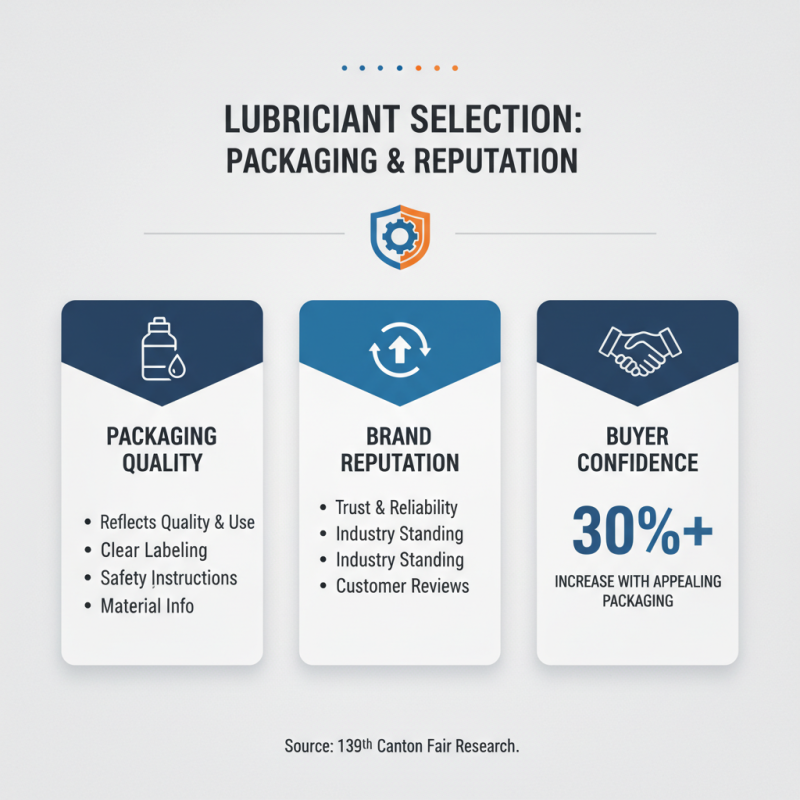
When selecting the best lubricant at the 139th Canton Fair, assessing the packaging and brand reputation is crucial. Packaging should reflect the quality and intended use of the lubricant. Clear labeling, safety instructions, and material information are essential. Research shows that products with visually appealing packaging can increase buyer confidence by over 30%.

Brand reputation plays a significant role. According to industry reports, consumers are likely to choose well-known brands due to perceived reliability. An established brand often indicates rigorous testing and quality assurance. However, smaller brands may offer innovative solutions and competitive pricing. It's vital to analyze customer feedback and reviews to gauge true product performance.

**Tips:** Verify the packaging materials for durability. An eco-friendly option can enhance your brand image. Explore testimonials from users. They provide insights that data alone may not reveal. Remember, the absence of negative reviews isn’t always a good sign. It could indicate manipulation.

Navigating Vendor Communication and Product Sampling Strategies

At the 139th Canton Fair, effective communication with vendors is crucial. Many buyers struggle to articulate their specific needs. A recent industry report indicates that over 40% of buyers cited miscommunication as a barrier to successful negotiations. Clear questions can help avoid misunderstandings. Prepare a list of what you need. This ensures your inquiries are direct.


Fostering relationships can enhance your experience. Start conversations that go beyond the product. Get to know their business philosophy and production capabilities. According to a survey from the trade association, 65% of successful buyers report building rapport leads to better deals.


When it comes to product sampling, precision is key. Request samples that mirror your actual requirements. A significant 70% of buyers noted that detailed evaluations of samples impacted their final decisions. Yet, not all samples reflect true quality. Be vigilant and ask probing questions about the materials used. Verify claims presented by the vendors. This process isn’t foolproof and requires due diligence.

x

Back to the top