Free Shipping on Orders Over $800 | Become a customer!

Apply Now

Search

This section doesn’t currently include any content. Add content to this section using the sidebar.

Image caption appears here

Add your deal, information or promotional text

China Top 10 Butt Plug Manufacturers for Global Buyers

The global sexual wellness market is expanding, and buyers increasingly expect products that combine thoughtful design with dependable manufacturing. Grand View Research’s Sexual Wellness Market Size, Share & Trends Analysis Report estimated the market at USD 37.2 billion in 2023, with projected growth through 2030. That figure covers a broad market, not Butt Plug sales alone. Still, it signals a larger commercial context for buyers evaluating suppliers.

For global buyers, a manufacturer’s catalogue is only part of the decision. Material specifications, production consistency, packaging options, and documented quality procedures deserve close attention. Ask whether a supplier can explain its material choices, inspect finished goods, and provide traceable batch records. Details matter. A polished product photo cannot confirm what is inside the finished item. Buyers should also review communication practices, sample quality, lead times, and export documentation before placing a larger order.

This guide introduces ten China-based manufacturers for consideration, with attention to capabilities relevant to international sourcing. It is intended as a starting point, not a substitute for independent verification. Supplier claims can change, and public information may not reveal every production detail. That gap matters. Request current documentation, assess samples, and confirm that products and sales practices meet the requirements of each destination market. Careful evaluation takes time, but it can help buyers make more informed, responsible sourcing decisions.
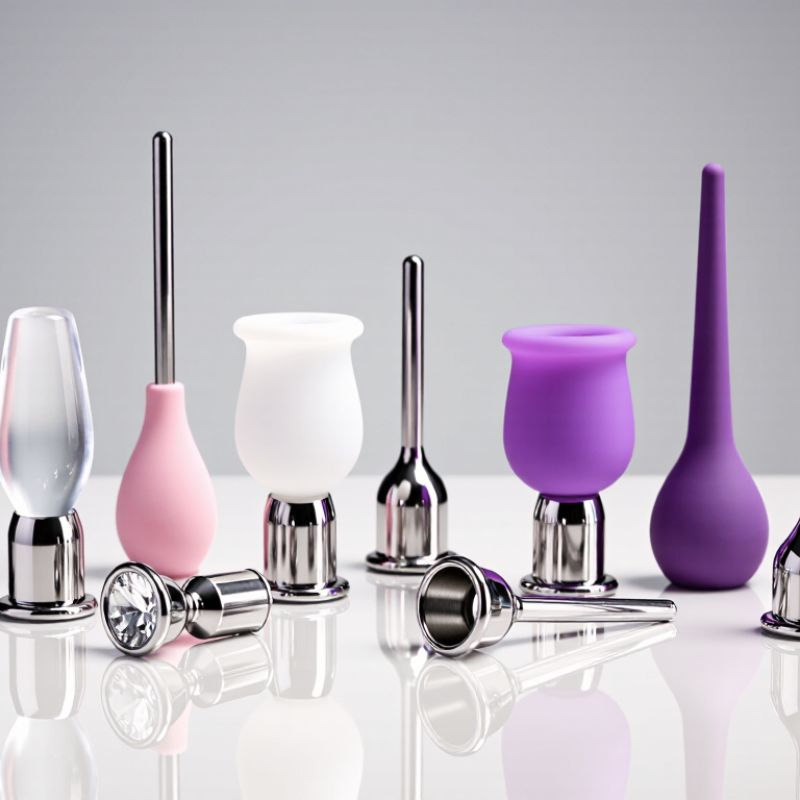
China Top 10 Butt Plug Manufacturers for Global Buyers

Overview of China’s Butt Plug Manufacturing Industry

China’s butt plug manufacturing industry sits within a broader adult wellness supply chain that serves both domestic and export markets. Factories commonly combine silicone molding, product assembly, packaging, and quality checks, while suppliers may source materials and components from different regions. The category’s exact output is difficult to verify: public trade and market datasets generally group these products with wider adult-product or personal-care categories.

Grand View Research estimated the global sex toys market at USD 35.2 billion in 2023 and projected an 8.6% compound annual growth rate from 2024 to 2030. This is a broad-market indicator, not a China-specific butt plug sales figure. For buyers, practical evaluation matters more than headline market size. Ask for material documentation, batch inspection records, dimensional tolerances, and packaging samples. A smooth finish helps, but it does not replace documented quality control.

Tips: Request a sample from the intended production line. Check for surface defects, odor, and consistency between samples. Confirm how the supplier handles rejected batches. Small details matter. In an industry where public product-level statistics remain limited, transparent factory records and clear specifications offer a more dependable basis for comparison than unsupported capacity claims.
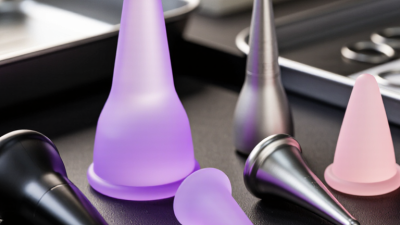
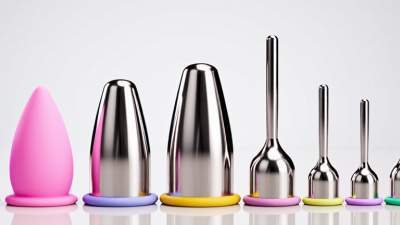
Materials, Safety Standards, and Production Methods

For global buyers, material choice is a safety decision, not just a price decision. Platinum-cured silicone, stainless steel, and ABS are common options, but material names alone do not prove product quality. Ask suppliers for material specifications, batch traceability, and independent test reports covering chemical composition and surface integrity. ISO 10993 provides a framework for evaluating biological risks; it does not automatically certify every consumer product. Check what the test actually covers.

Production details matter. Smooth, seamless surfaces are easier to clean than rough joins or deep creases. Buyers should review mold finish, curing controls, and inspection records, then request samples from a production batch—not only a showroom sample. Grand View Research estimated the global sex toys market at USD 35.2 billion in 2023. That growth raises sourcing opportunities, but it also makes careful supplier checks more important. A polished sample can still hide inconsistent batch control. This is easy to overlook.

Tips: Request current test reports, confirm the tested material matches the ordered product, and ask how defects are logged and corrected. Keep those records.

How to Evaluate Manufacturers for Global Sourcing

When comparing butt plug manufacturers for global sourcing, look beyond catalog photos and unit prices. Request a current material declaration and relevant test reports, then confirm which product and production batch they cover. For silicone products, ask how the material is verified and whether the report comes from an independent laboratory. A vague “body-safe” claim is not enough evidence.

Review the factory’s quality controls in practical detail. Ask how dimensions, surface finish, and packaging are checked, and how rejected units are recorded. Request a pre-production sample, then compare it with goods from a later batch. A glossy sample proves little. Batch traceability matters when a defect appears months after delivery. Some suppliers may have solid processes but imperfect records; treat that as a point to investigate, not a promise.

For overseas orders, confirm lead times, minimum quantities, carton specifications, and shipping documents in writing. Ask who handles export paperwork and how packaging protects the product from dust and damage. Requirements differ by destination, so verify applicable product, labeling, and import rules with qualified local advisers. Clear answers are useful. So are clear limits. A manufacturer that flags an uncertainty may be more reliable than one that guarantees everything.

Profiles of 10 Chinese Butt Plug Manufacturers

This name-free guide presents ten capability-based profiles of Chinese butt plug manufacturers, not an audited ranking. Grand View Research estimated the global sexual wellness market at USD 59.5 billion in 2023 and forecast 8.23% annual growth through 2030. That wider category includes many products, so the figure should not be read as butt plug sales alone.

The profiles cover distinct production strengths: one focuses on silicone molding; another on compact, travel-friendly designs; a third on textured surfaces; a fourth on adjustable sizing; a fifth on discreet packaging. A sixth emphasizes small production runs, while a seventh offers multiple material options. An eighth profile highlights custom colors, a ninth focuses on documented quality checks, and a tenth serves buyers seeking coordinated packaging and product development. Buyers should request material specifications, sample units, inspection records, and clear defect-handling terms. Details matter. A polished sample does not prove that every production batch will match it.

These profiles are useful starting points, not substitutes for supplier verification. Ask how dimensions and surface finish are checked, and whether batch records are available. The public market data is broad, and supplier capabilities can change. One limitation remains: without independent factory audits, even a detailed profile cannot confirm consistent production quality.

China’s Butt Plug Manufacturers: Article Scope

The title covers ten Chinese manufacturer profiles. Company and brand names are intentionally excluded from this chart.

Export, Compliance, and Supplier Verification Considerations

For global buyers comparing China-based butt plug manufacturers, export readiness should be checked alongside product quality. UNCTAD’s Review of Maritime Transport 2024 reports that seaborne trade grew 2.4% in 2023, reaching 12.3 billion tonnes. That scale does not guarantee predictable delivery. Ask suppliers for recent export records, carton dimensions, packing lists, and written lead-time assumptions. Check that sample labels, invoices, and product descriptions match. Small details matter.

Compliance is not a certificate pasted onto a webpage. Request material specifications, batch traceability, and test reports tied to the exact product and production site. Confirm the laboratory, test date, and methods; then verify requirements with qualified counsel in each destination market. OECD’s Due Diligence Guidance for Responsible Business Conduct supports checking risks across business relationships, not just reviewing a supplier’s claims. A factory audit can help, but it cannot replace document checks or ongoing monitoring. Compare several suppliers using the same checklist, and record unresolved gaps. I would still treat even a polished audit as a snapshot, not a promise.

China Top 10 Butt Plug Manufacturers for Global Buyers - Export, Compliance, and Supplier Verification Considerations

Buyer due-diligence framework: This table lists ten practical supplier-verification areas, not a ranked or independently verified list of companies. Request current, product-specific evidence before placing an order.

No. Evaluation Dimension Evidence to Request and Check Export and Buyer Considerations
1 Business and factory identity Verify the registered business name, business license, registered address, factory address, and the relationship between the contracting entity and the production site. Confirm that the entity receiving payment, signing the contract, and appearing on export documents is properly explained and consistent with the transaction.
2 Product and material specification Request a dated product specification identifying dimensions, weight, construction, surface finish, and the exact material formulation or material grade supplied for the quoted model. Avoid relying on broad descriptions such as “body-safe” without supporting documentation. Ensure the approved sample and written specification match the production order.
3 Material and chemical testing Ask for relevant test reports tied to the material, finished product, or production batch, including the laboratory, test date, sample identification, and methods used. Select tests according to destination-market rules and product claims. A report for a different model or material may not substantiate the item being purchased.
4 Quality management and certification Request applicable quality-system certificates and verify the issuer, validity dates, certificate scope, and covered site directly with the issuing body where possible. A management-system certificate is not proof that every product complies with every market requirement. Check that its scope is relevant to the actual manufacturing activity.
5 Production controls and traceability Review documented incoming-material checks, in-process inspections, finished-product acceptance criteria, nonconformance handling, and lot or batch identification practices. Agree in writing how production lots are identified and how defects, replacements, corrective actions, and retained samples will be handled.
6 Product safety and design checks Request the supplier’s inspection criteria for dimensions, surface defects, structural integrity, cleaning instructions, and any product-specific safety testing it performs. Review intended use, warnings, and instructions for the destination market. Medical-device testing or standards should not be assumed to apply unless the product’s classification and claims require them.
7 Destination-market compliance Ask for a written list of applicable rules for each intended country or region, together with supporting declarations, test reports, and labeling materials where required. Requirements depend on product design, claims, and destination. For example, EU chemical restrictions and general product-safety obligations may be relevant; CE marking is not a universal requirement for non-electrical products.
8 Packaging and labeling Review draft labels, packaging artwork, instructions, warnings, material information, country-of-origin details, and any required importer or responsible-person information. Have final artwork checked for the destination market before printing. Confirm that packaging claims are supported and that required information is legible and consistent across documents.
9 Export documents and customs preparation Confirm the supplier can prepare a commercial invoice, packing list, and other agreed export documents, and provide accurate product descriptions and shipment details. Customs classification and duties depend on the product and importing jurisdiction. Confirm the appropriate classification and documentation with a qualified customs broker or relevant authority.
10 Commercial terms and independent verification Check sample approval, written specifications, order terms, payment beneficiary details, lead-time commitments, inspection rights, and any proposed independent factory or pre-shipment inspection. Use a documented approval process and verify changed bank details through a trusted, separate communication channel. Consider an independent inspection before shipment for initial orders.
x

Back to the top